Sailing with Kjell

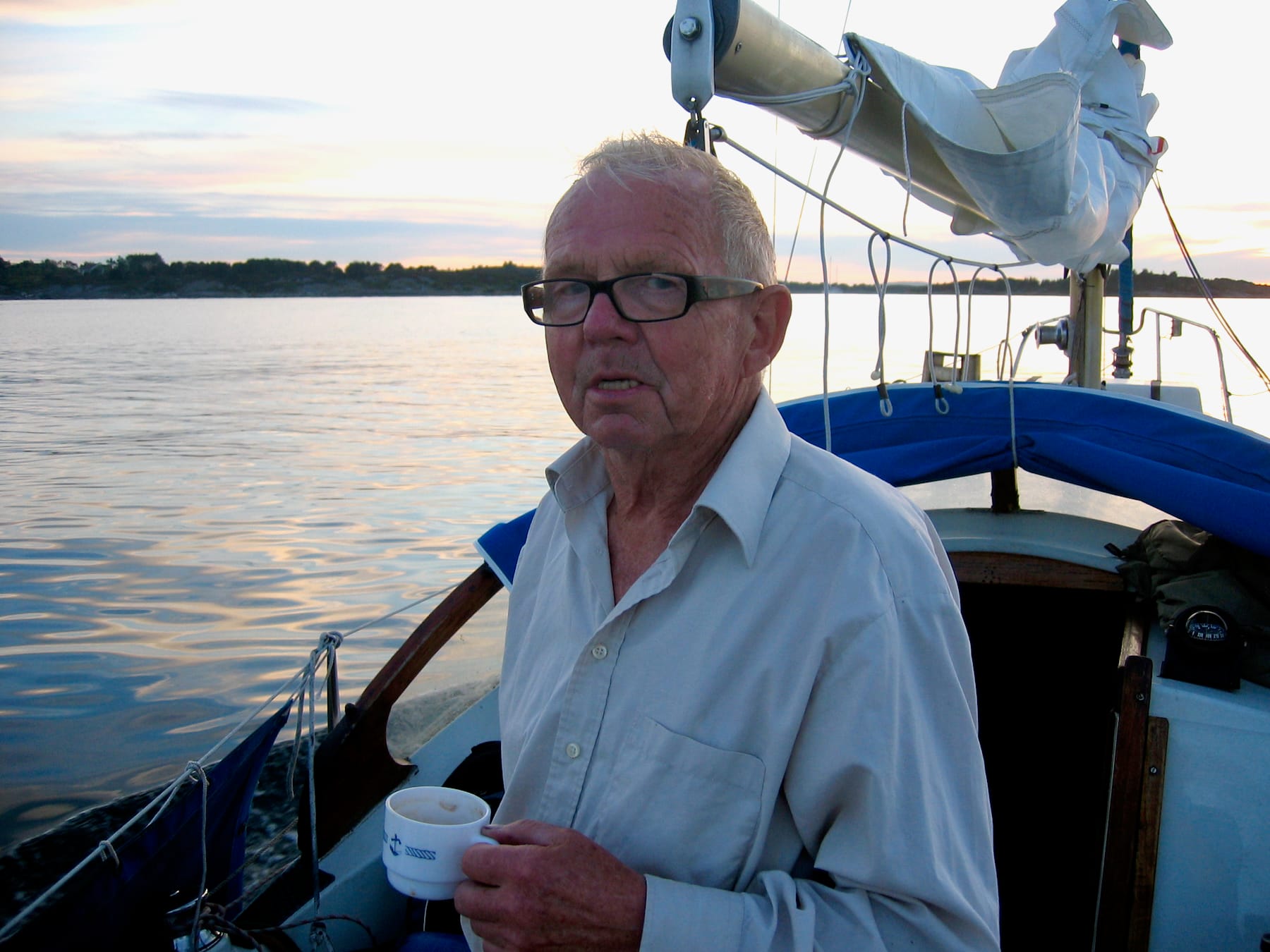
During the last year I spent in Norway (1999-2000) I was introduced to an elderly Norwegian man by the name of Kjell (pronounced Shell.) Back then he was 73, younger than I am as I write this. But then, well, that was 26 years ago. He was a retired ship's pilot for the harbor of Stavanger with an encyclopedic knowledge of astronomy.
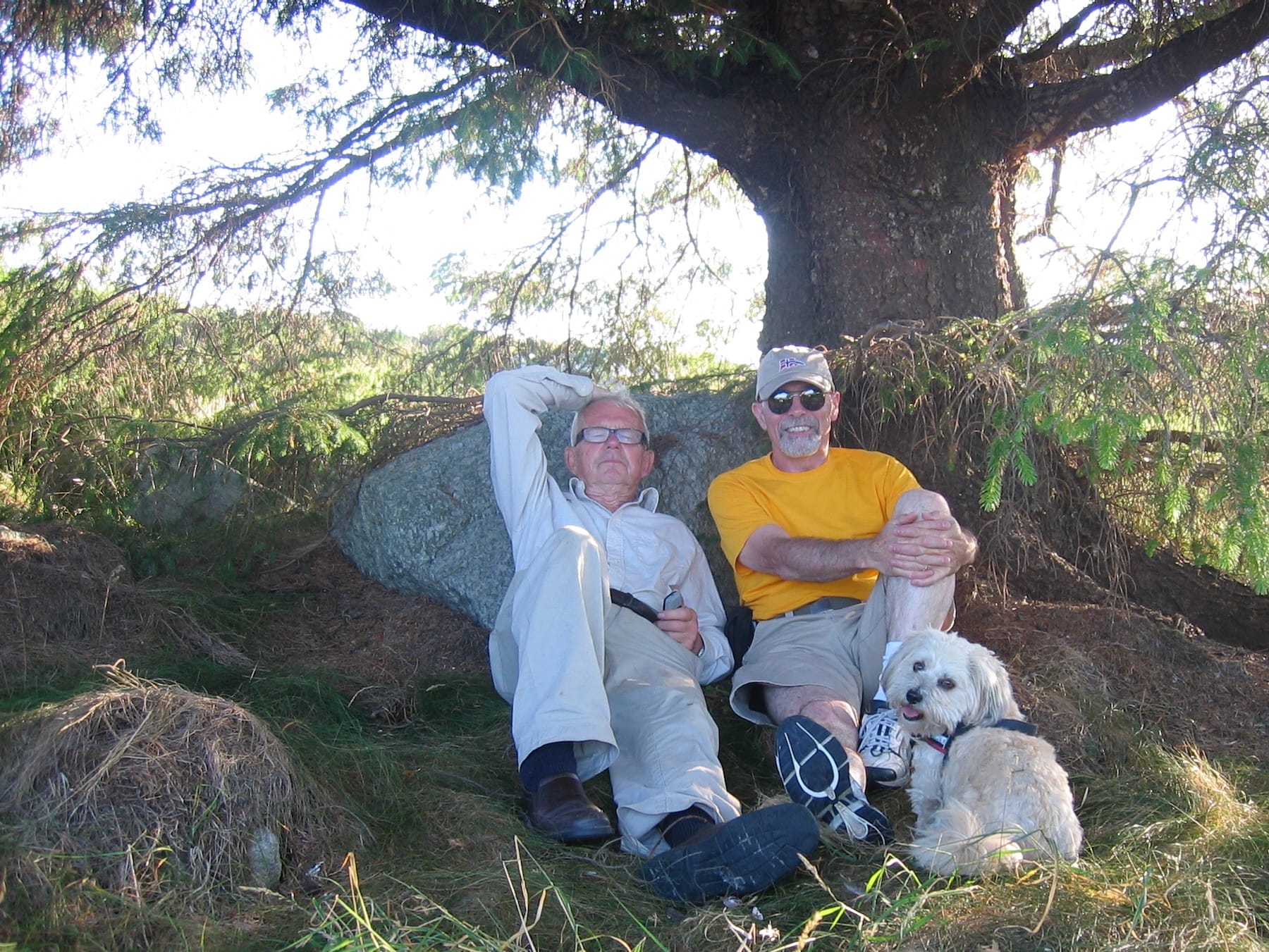
Kjell was a warm-hearted, Scotch-drinking, trumpet-playing sailor. He rolled his own cigarettes, sang with abandon, frequently off key, and lived alone on Vassoy, one of the smaller city islands part of the city of Stavanger.
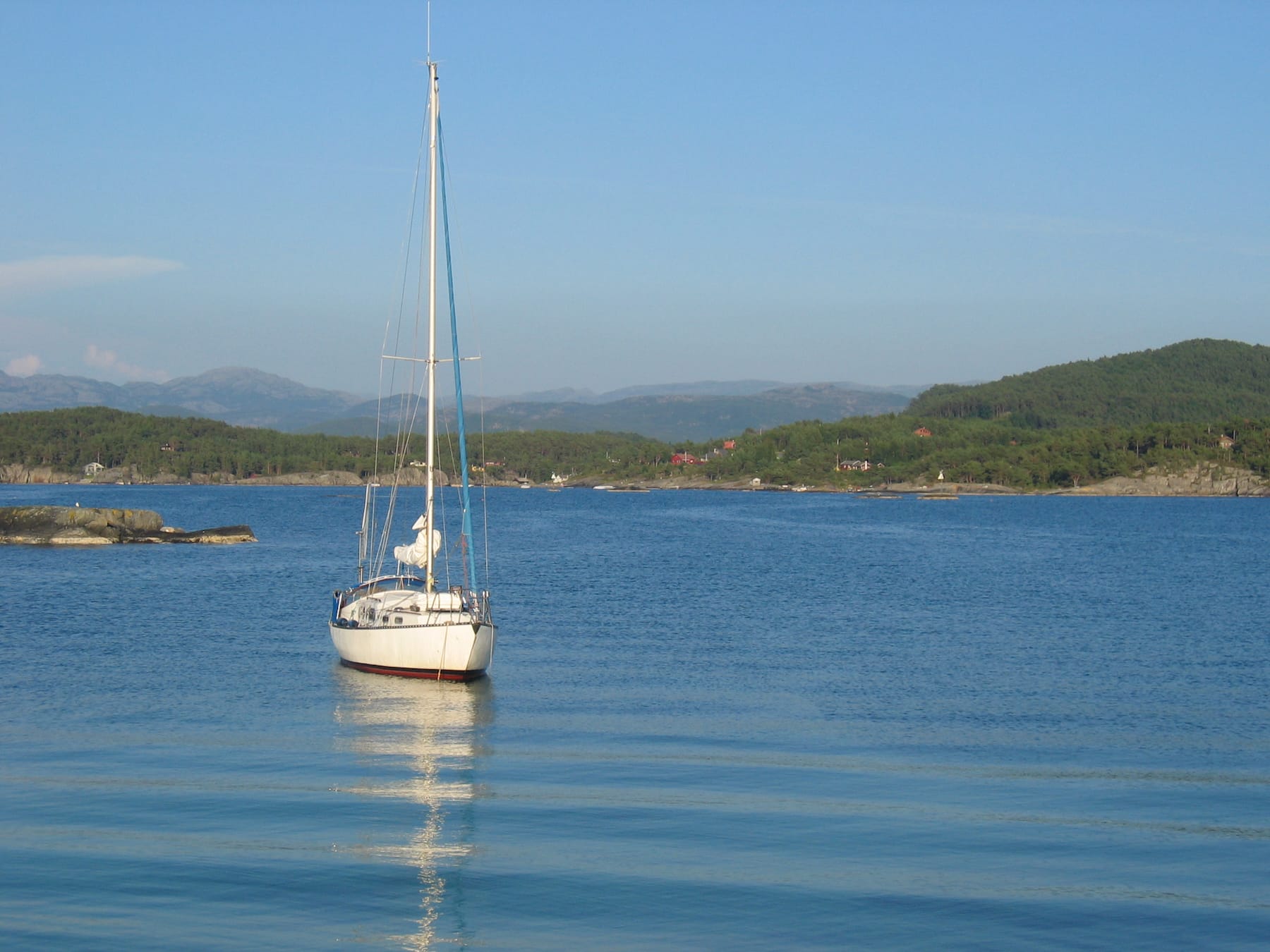
To complicate matters, there were two Kjells on Vassoy, each living on opposite ends of the island. One, known as Kjell North, the younger of the two, was a cruise ship captain. The other, Kjell South was the Kjell I knew best. I got to know Kjell North through Kjell South. They were close friends and both sailors. Each of them owned a single-masted sloop, and spent their leisure time out on the North Sea. I had the pleasure of celebrating the 2000 summer solstice dinner with Kjell North, his wife, and Kjell South at Kjell North’s home as bonfires blazed in the distance.
Kjell South, like many Norwegians, was an intrepid sailor. Even at his advanced age he was sure of foot on his boat. Every year he would sail to the Shetland Islands for the annual fiddle festival. Some years he would bring a friend’s dog for company, but most years he made the trip alone, a distance of about 250 miles or 410 kilometers of open ocean. On one occasion he sailed down the coast of Europe to the Mediterranean Sea, again on his own. Still, Kjell was a sociable individual, and as luck would have it, he was looking for a “first mate.”
The “job interview” went something like this:
“Thom, do you like being on the water?”
“I do Kjell. I spent my summers on the water at my Grandparent’s cottage on Long Island Sound.”
“Do you get sea-sick?”
“Never have.”
“Do you want to go sailing sometime?”
“That would be great!”
“Then it’s settled. When are you free?”
On any given Friday afternoon Kjell would dock his boat, the Algenib, named after one of the major stars in the constellation Pegasus, near the center of Stavanger. I would meet him downtown and we would buy a leg of lamb and some vegetables, and a bottle of Scotch. Upon embarking Kjell would let me take the tiller while he filled a large pot with the makings of lamb stew, and set it on the stove to cook. We would then switch places and I would pour us each a Scotch. We would toast, “Skol” and set off for parts unknown, at least unknown to me. Kjell always had a destination in mind.
One evening we moored at an island whose name has fallen from my memory. I do recall that we tied the boat off on a long wharf and walked into a small town. In the center there was a well-lighted community hall that seemed to be hosting some sort of performance. Once inside we sat and listened to a rousing hour of Hungarian Folk Music played on a Hurdy gurdy and accompanied by a dazzling violinist, who we later learned was the first violin in the Stavanger Symphony. She played like a woman possessed.
When he was feeling the effects of more than a couple of Scotches, Kjell would open his trumpet case and begin to play. Usually it was a selection from the 30s or 40s, like “All of Me,” or a show tune such as “Some Enchanted Evening.” He didn’t play particularly well. He had stopped practicing years ago, but he did play with enthusiasm. One warm night around midnight, Kjell decided to share his music with the villagers living on the edge of the harbor where we were anchored. I tried to dissuade him, but he would have none of it as he stood on the deck of the Algenib and serenaded the village.
We sailed in every season, so GoreTex outerwear was a necessity. On one occasion in early winter as we were heading for Kvitsoy, one of the islands a few hours from Stavanger, the wind was driving pellets of snow sideways. The seas were rough and we had to finesse our way into the safety of the little harbor. Once inside the sea flattened as we came about, dropped the sails and anchored for the night. What followed was a hot meal of lamb stew, a few more Scotches, and then some philosophizing on Kjell’s part.
Kjell was the quintessential “be here now” practitioner. He lived in the moment. As the night wore on the conversation deepened. Ultimately it got to the point where Kjell would ask the one essential question. “Thom, Thom! Has there ever been or will there ever be a moment as perfect as this?” Sure, it was a rhetorical ask, but at its heart it was an affirmation of life, and a celebration of the beauty of each moment. It was a bond of friendship.
The Norwegian language contains fewer words than English. As a result Norwegians get right to the point. There isn’t much embellishment. That doesn’t mean that there aren't many beautiful Norske expressions. My favorite is the greeting you offer someone when encountering them after not seeing them for a time. “Takk for sist!” Literally it means “Thank you for the last time,” but by extension, “Thank you for the last time we were together.” I love the sentiment.
I’m quite sure that Kjell died some years ago. Still I reamain grateful for the time we spent together, sailing, drinking and philosophizing. So, one last time I say, “Takk for sist, Kjell! Ha det bra.” (Thank you for the last time we were together. Good bye, and be well.)